Using AI agents to turn regulator data into personalised ABM content
How I used public data and agents to show every target account its own numbers.
The goal
In spring 2026 I was working with Noxus, a small AI company that automates complaints handling and the other work most teams assume can't be trusted to software. They wanted to break into UK financial services: the big banks, insurers and wealth managers.
Those are hard accounts to get into. They don't take many risks, and a lot of it comes down to whether you seem trustworthy. Noxus had really good results at Santander to build on, so the job was to turn that into conversations with everyone else.
I built the target account list with Noxus's head of go-to-market, and we tiered it, first on ICP fit and then on signals. They built the workflows that found the signals. My part was the content: something worth each account's time.
What we made
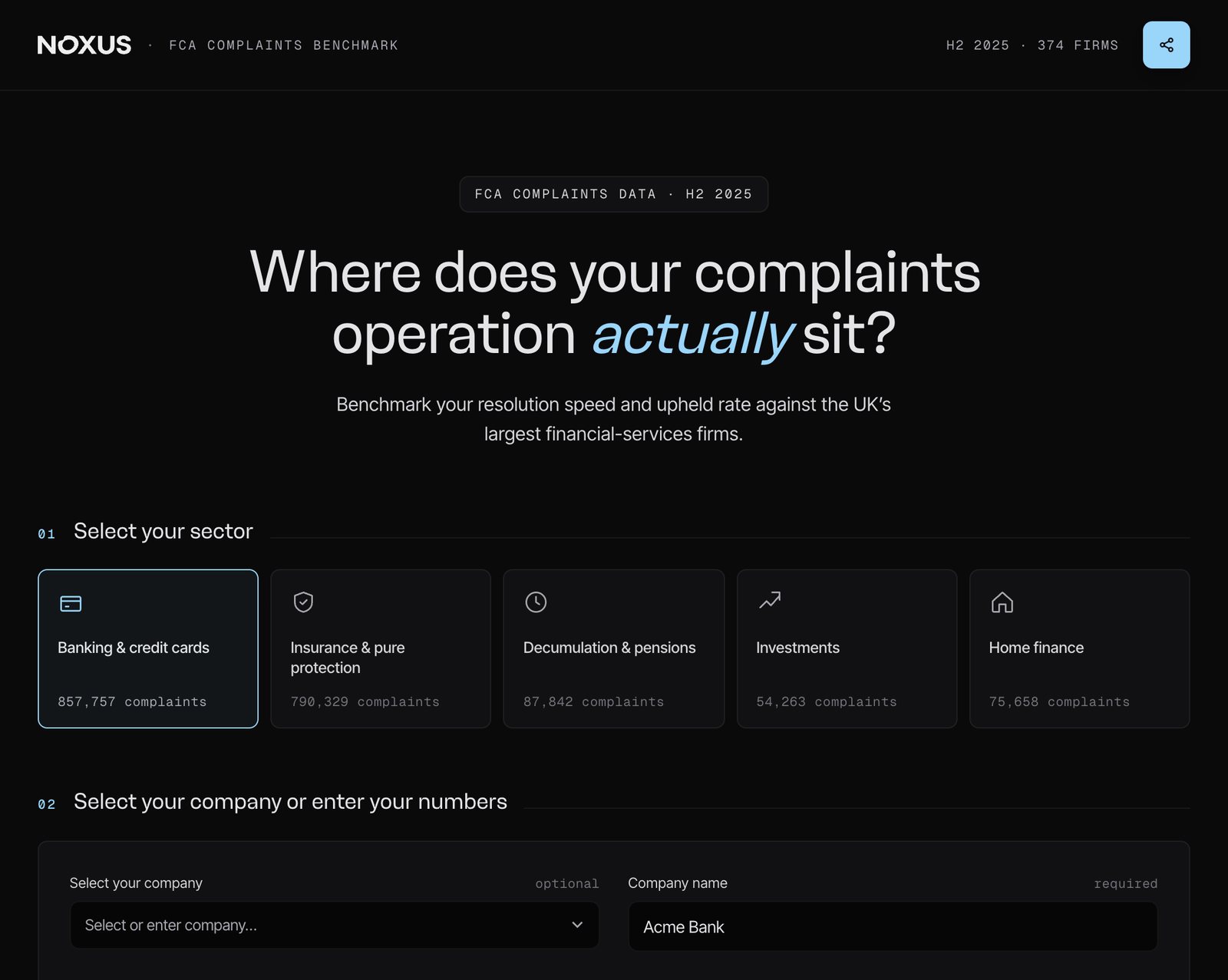
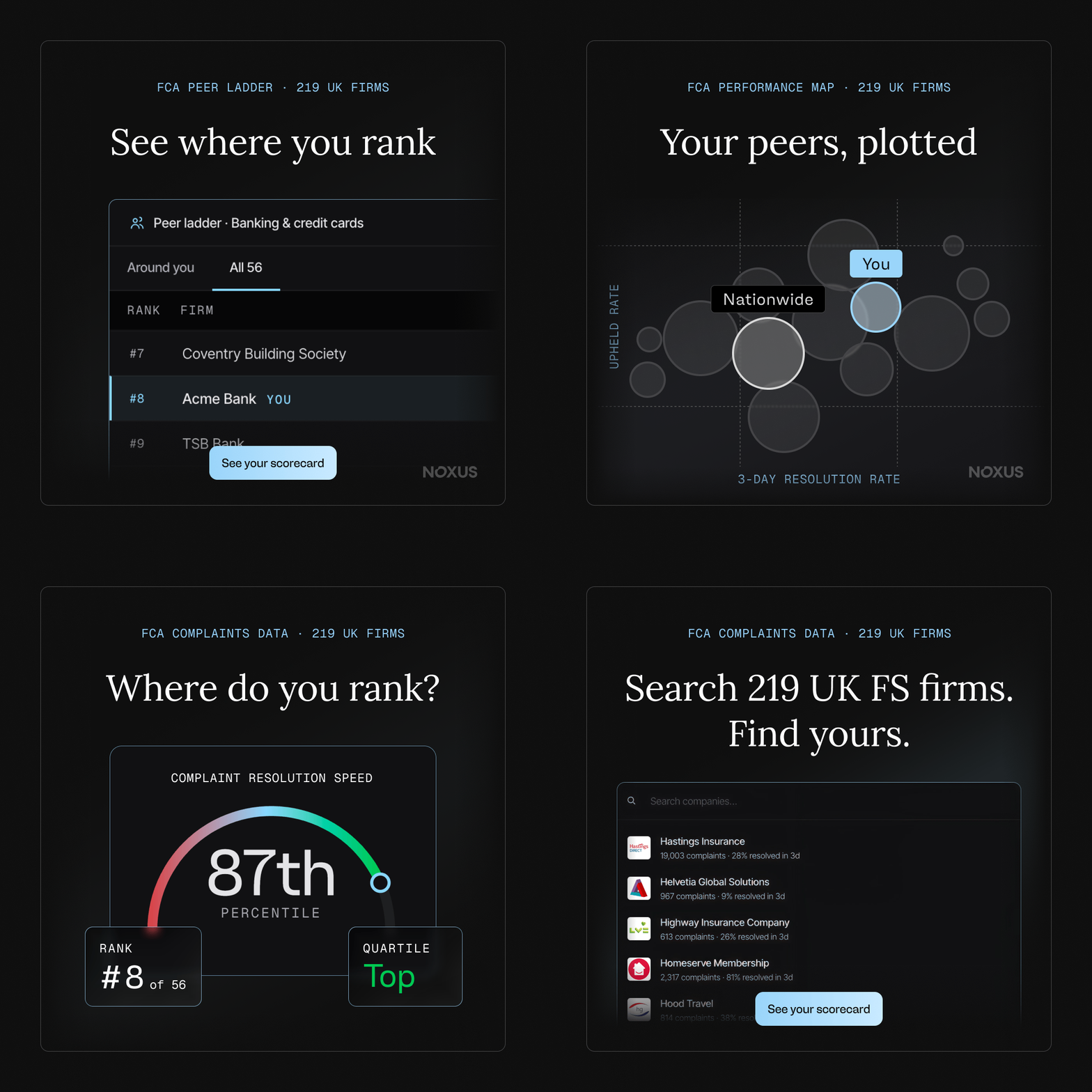
Here's where it ended up. Put a firm's name on the end of a link and you land on its complaints scorecard: how quickly it resolves complaints, how many it upholds, and where that puts it in its sector. This one's for Barclays.
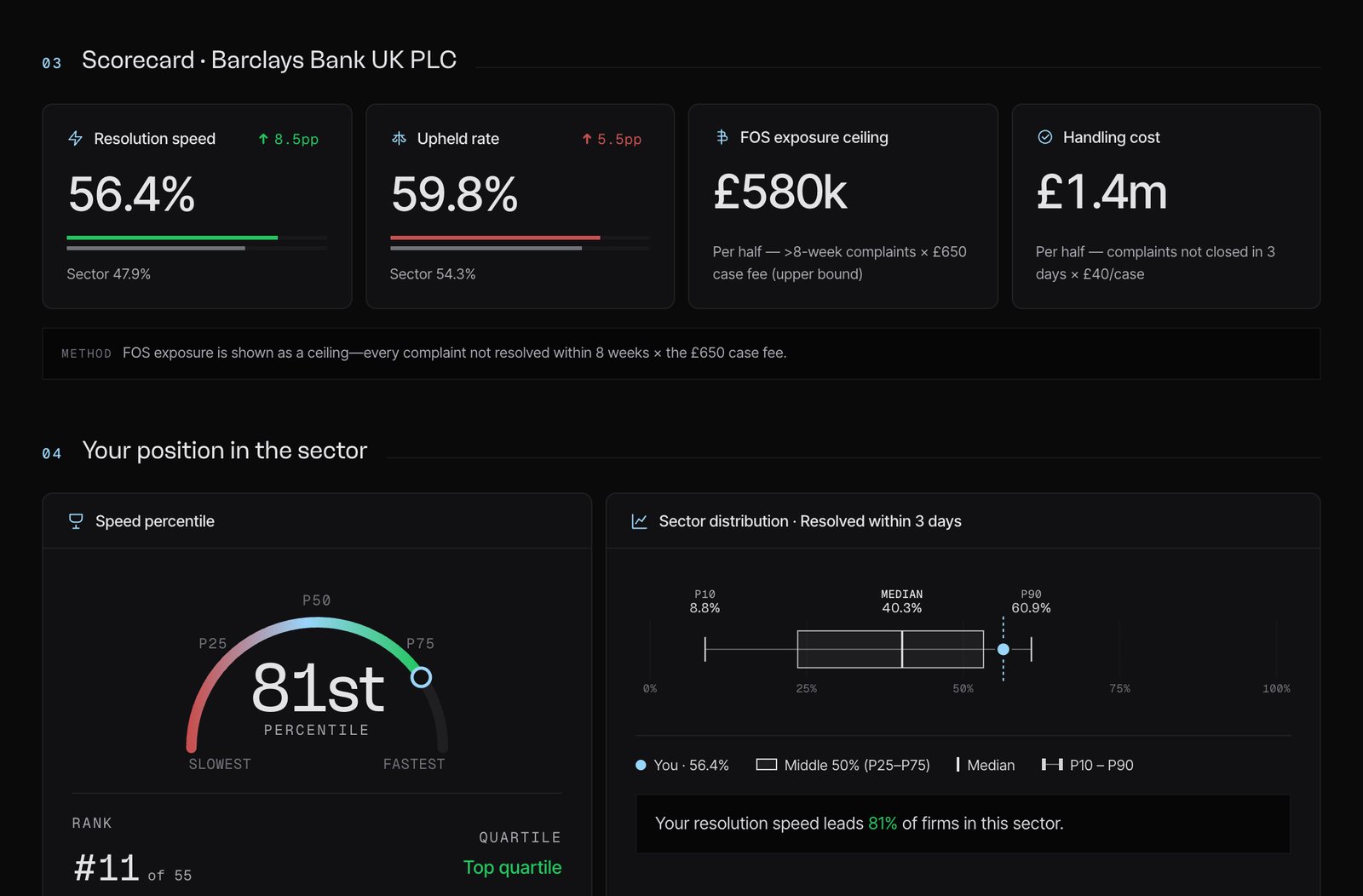
For a head of complaints, these are the numbers they're judged on, next to the peers they're judged against, with no form to fill in. Anyone on our side could send one to anyone on the list.
The data
Every regulated firm in the UK reports its complaints to the FCA, and the FCA publishes the lot twice a year, for free: how many complaints each firm closed, how quickly, and how many it upheld. Complaints teams are measured on exactly these numbers, and as far as I could tell, no other marketing team was doing anything with them.
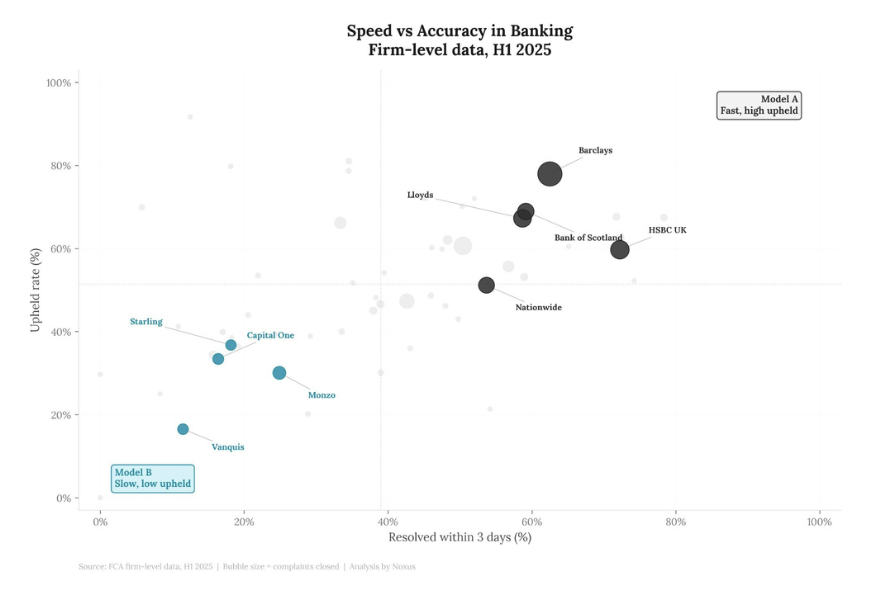
It gave us the story, too. When I plotted every bank by how quickly it resolves complaints against how many it upholds, they split into two groups: fast and upholding most of them, or slow and upholding far fewer. Hardly anyone managed both, and that gap is what Noxus is built for.
Three levels
We made three things from the same data, one for each level of the account list.
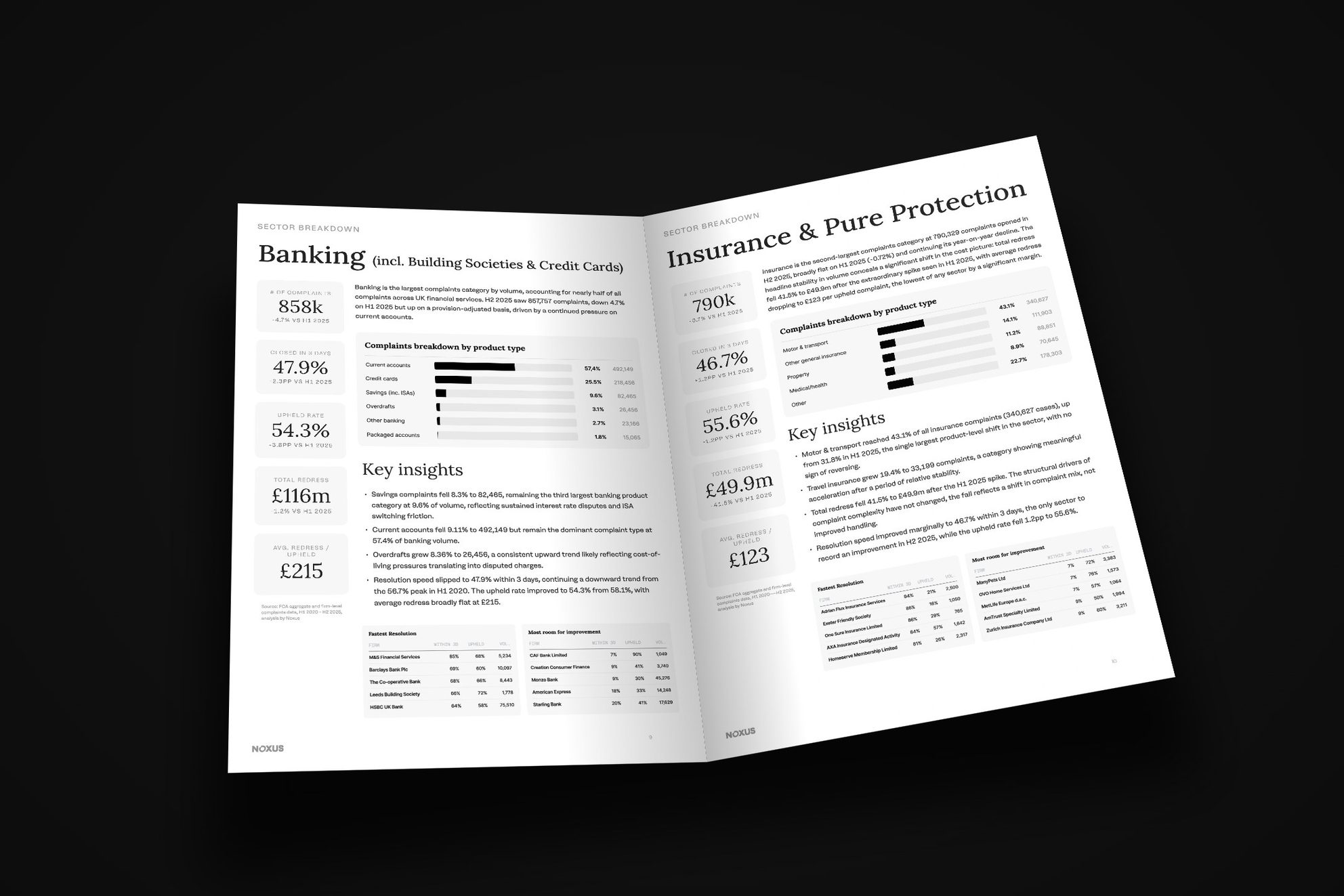
The report, for the whole market.
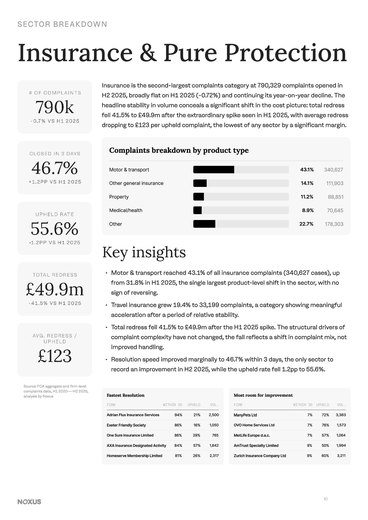
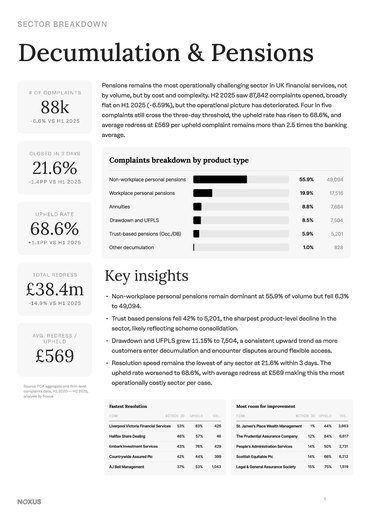
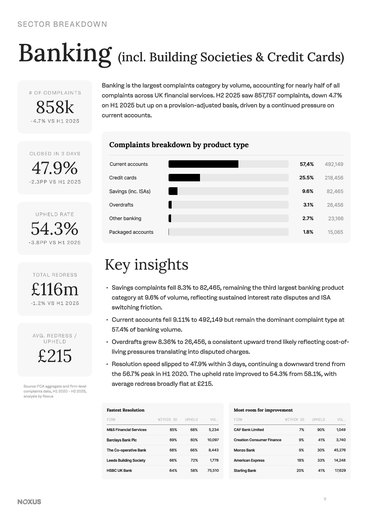
Sector pullouts, for each sub-industry.
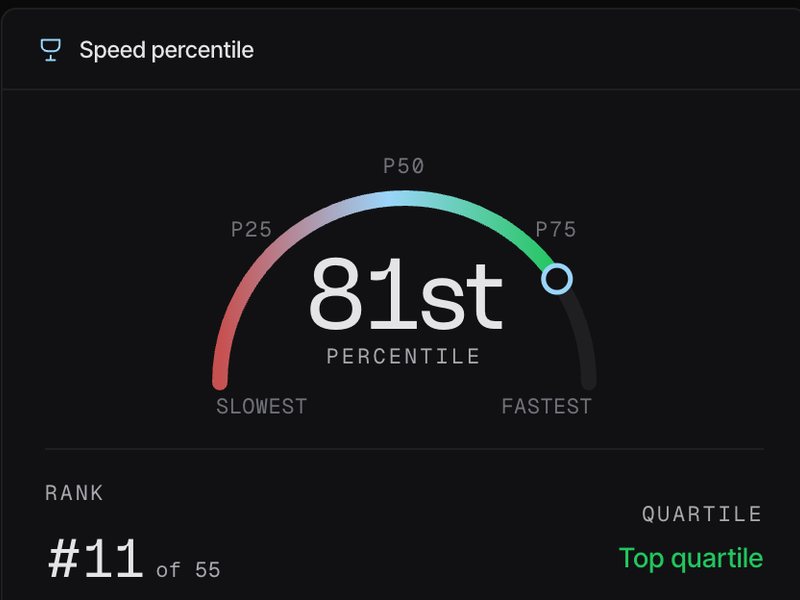
The tool, for each firm.
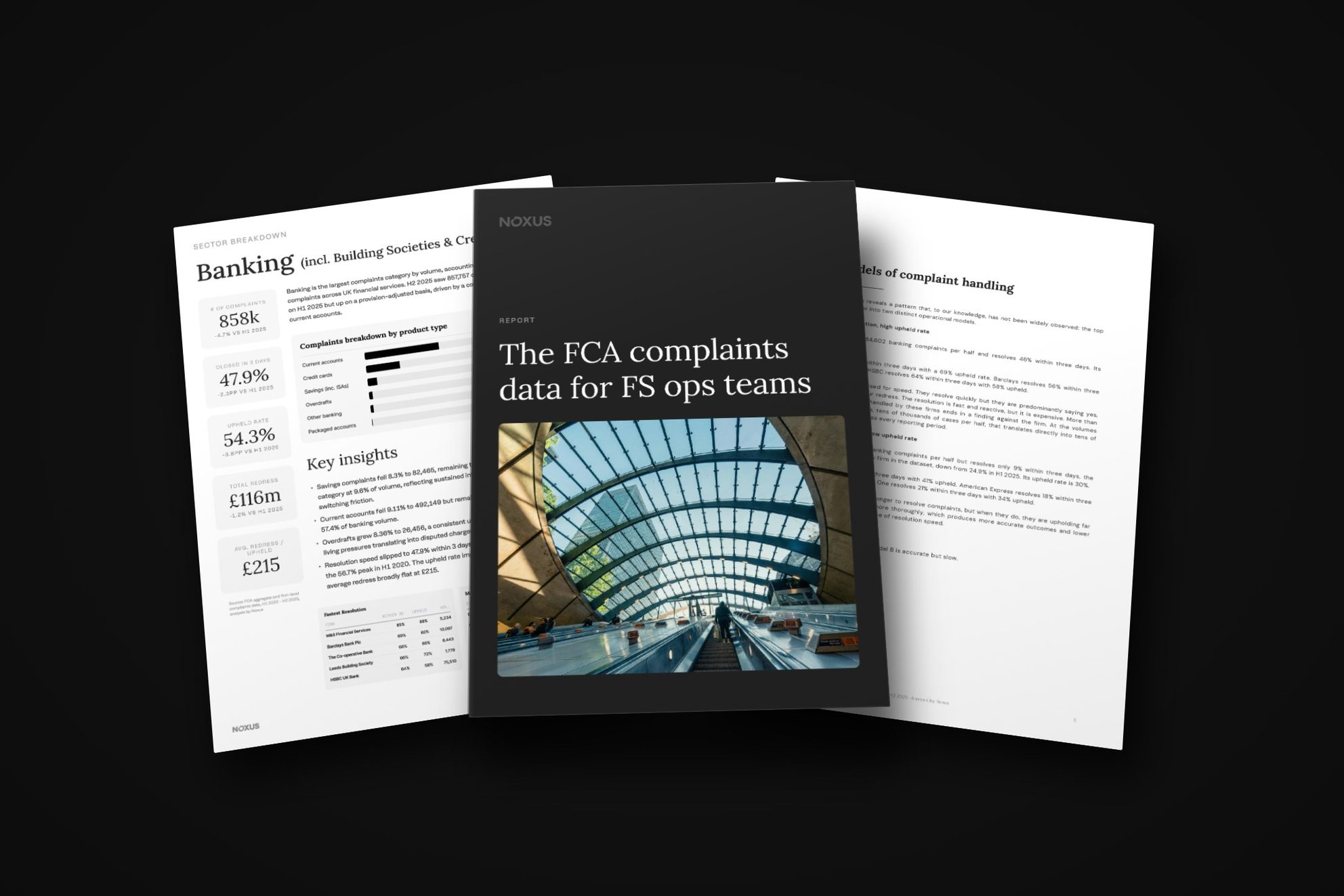
The report was for the whole market. Each edition covers a half-year (the first took in 1.85 million complaints and £283 million of redress), and I wanted it to read like research rather than a vendor's PDF, because I think senior people give a study more time than a brochure. It ended up being passed around inside the firms we were after.
The sector pullouts were for each sub-industry. We'd clustered the list into segments like banking, and insurance and pure protection, and sales had a pullout for each one, full of numbers to open a conversation with.
The tool was for each firm, and it's the part that changed the tiering for me. I'd usually only fully personalise for tier 1, because doing it by hand is slow. With the tool, most of tier 1 and tier 2 got something completely personalised, because each firm's own numbers were one link away. I think that's pretty cool.
How I built it
I couldn't have made all of this in about two weeks without agents. They pulled the FCA files down, cleaned and joined them, and ran a first round of analysis. Then one of Noxus's consultants and I checked all of it by hand. The agents got some things wrong, not loads, but enough that I wouldn't have put their numbers in front of a head of complaints unchecked.
For the tool, I did a rough pass in Figma, then handed it to an agent with the Noxus brand guidelines and built it from there, while agents wired in every firm's numbers. We spun it up pretty quickly. Looking at it now, it has a bit of a designed-by-Claude look, which I find quite funny: we made it in April 2026, when designing with Claude got you nowhere near what it does now, and it already looks a little dated. The idea holds up fine.
Here's roughly how the work split.
The agents
- Pulled and cleaned the data
- Ran the first-pass analysis
- Built the tool from my design
- Wired in every firm
Us
- Chose who to go after
- Decided which comparisons were fair
- Checked every number
- Decided how it looked and read
That's roughly what I mean by marketing engineering: building the campaign, the data and the tools myself, with agents doing a lot of the heavy lifting, and still making the calls.
Getting it out
With the accounts tiered and the content made, everyone selling had a hook for every account, all pointing back at the same data.
- Outbound. Tier 1 got personal outreach, written with the account executives and leading with the firm's own numbers. I wrote the rest of the tiers end to end.
- LinkedIn ads. Mostly document ads, so people could read the first pages of the report in the feed.
- Founder posts. Noxus's founder shared the sharpest findings on LinkedIn.
- An executive dinner hosted by Noxus, which the BDRs could invite people to. Another string to the bow.
It brought in over 100 inbound leads from financial services firms, from challenger banks to some of the biggest names on the high street. About three quarters were director level or above, and 28 were in the C-suite.
What I'd tell someone trying this
If I were helping someone do this again, this is what I'd say.
- Start with the data your buyers are judged on. For us it was the regulator's. Public registers, tenders, job postings and price lists are where I'd look next.
- Make something for every level of the account list. The market, each segment and each account, so every tier gets something made for it.
- Let agents do the first pass, then check everything. They were quick and mostly right, and a senior buyer will spot the bit that isn't.
- Point everything at it. Outbound, ads, posts and the dinner all led back to the same data, which made each of them easier.
I've done this kind of work for years, mostly as the first or only marketer at a B2B tech company. What's changed is how much one person can build, and how quickly. This campaign was one of the first times I really felt that.
If you're sitting on a dataset like this, or you think I've got something wrong, I'd like to hear about it. You can find me on LinkedIn.
Aidan
Questions people ask
How do you personalise ABM content for hundreds of accounts?
What worked for me was finding a dataset every account appears in, then building one asset that opens on each account's numbers. A firm's name in the link was enough to load its scorecard, so tier 2 accounts got the kind of personalisation I'd normally save for tier 1.
Can AI agents create ABM content?
In this campaign they did a lot of the production: pulling and shaping the data, a first round of analysis, building the tool from a design and drafting copy. Choosing the accounts and the dataset, deciding which comparisons were fair, checking the numbers and making it feel right still took people.
Where do you find data for ABM content?
I'd start with whatever your buyers are regulated or measured on. Regulators, public registers, tenders, job postings and pricing pages are all worth a look.
Is public data good enough for senior buyers?
In my experience, yes, if it's analysed properly and checked. It can land better than survey data, because they can go back to the source and see that it holds up.