

Noxus
Helping Noxus break into UK financial services
Noxus is a seed-stage AI platform that automates complex, regulated workflows in industries like finance and manufacturing—the kind of regulated, error-intolerant work most teams assume can't be automated.
That made financial services a strong fit, and we went after a hard corner of it: complaints and operations teams. Heavily regulated, accuracy-critical, exactly the kind of work the platform is built for—and a big market where the buyers are senior and slow to trust.
So the campaign came down to one question: what would these sceptical, hard-to-reach buyers actually find worth their time?
Senior buyers are drowning in vendor content, so I went looking for real data instead
They're inundated with generic guides and thinly disguised POV pieces from firms with no real story or data behind them. So I went looking for something we could use to build an original piece of analysis—and a benchmark, so a firm could see how it compared to its competitors. Something that worked as both a report and a tool.
It was the FCA complaints data. Every regulated UK firm has to publish it. It's public, comparable, and a fairly direct read on where a firm is letting its customers down. To the best of my knowledge, no other marketing team was using it.
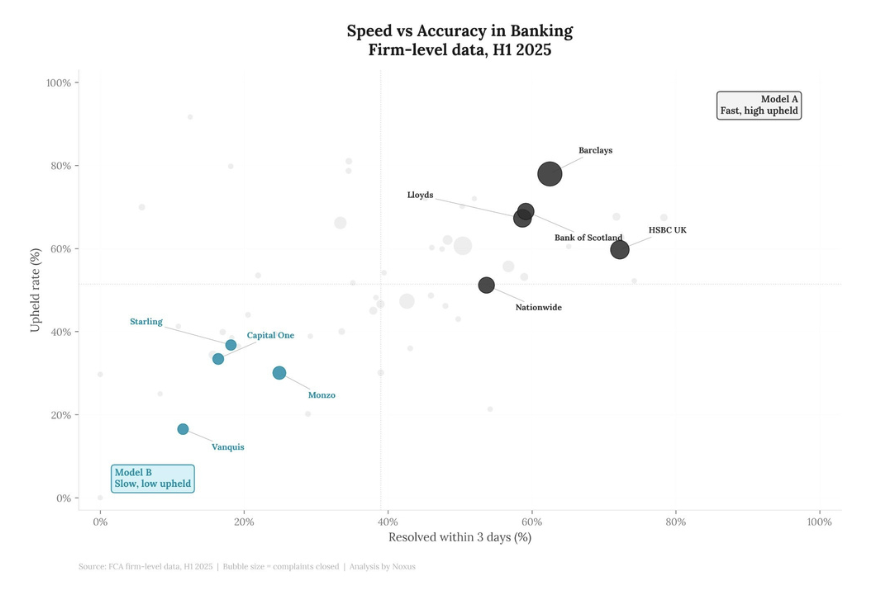
The report was built to read as research, not a brochure
I worked the FCA data into a clear read on how the sector and its players were performing, and made it deliberately look like a plain academic study rather than a glossy asset—a brochure puts senior people on guard, a real piece of research doesn't. I worked with a data scientist so the numbers held up to the operations people who'd pull the original data and check it. It got shared inside the firms we were targeting.
The benchmarking tool turned the report into something a salesperson could send to anyone
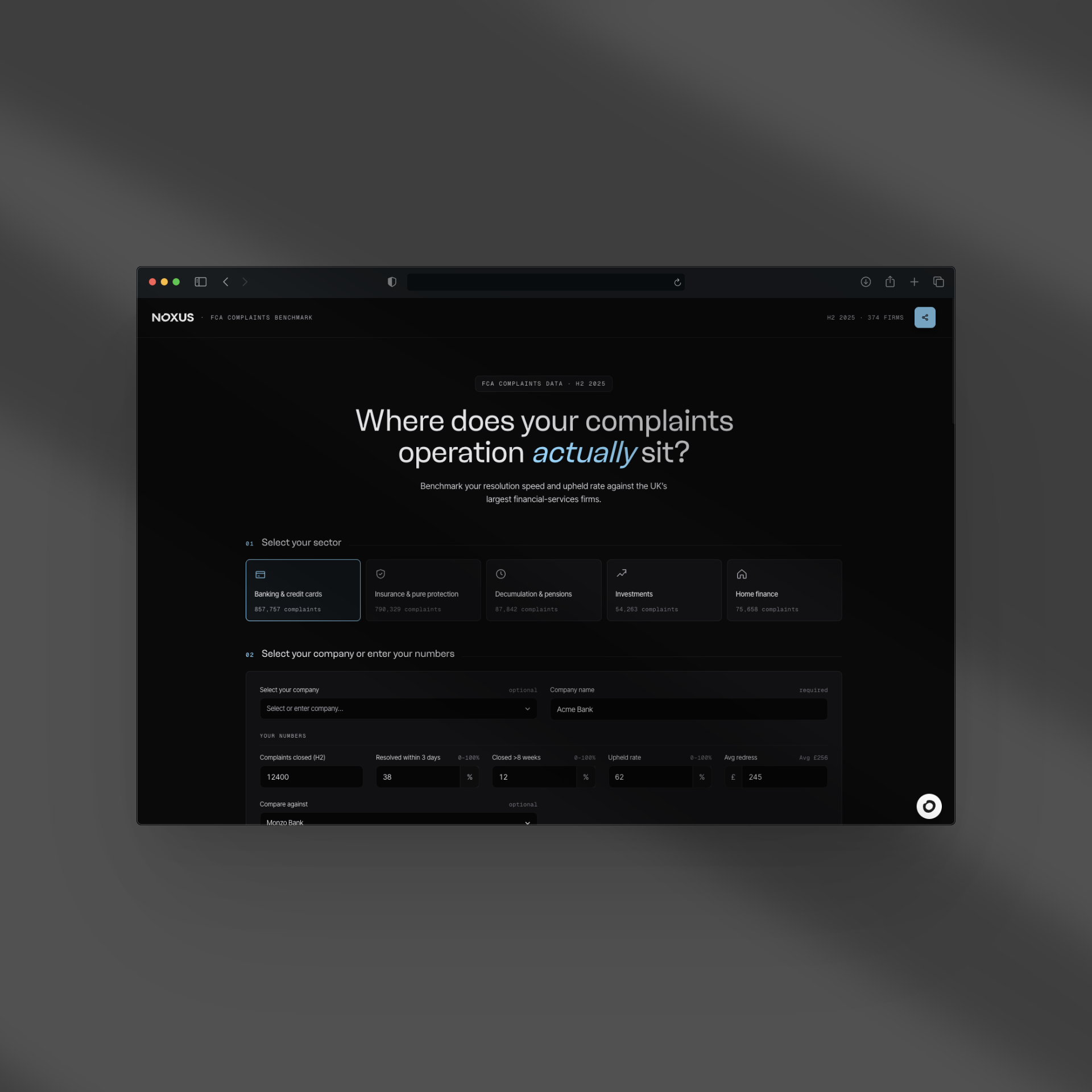
Then an interactive tool, so a firm could pull up its own numbers against its competitors. I designed it in Figma to the brand and built it fast with Claude Code.
Type a firm's name into the URL and the tool pre-loaded that company's data—300 to 400 firms, mid-market up to the biggest enterprises, all ready to go. So a salesperson could send anyone on the list their own personalised breakdown. The report made the case to the sector; the tool made it personal to one firm.
Twelve weeks, a modest budget, 90 senior leads
A modest LinkedIn ads budget and an inbound campaign that produced 90 leads:
- 72 at director or head level and above
- 28 of them in the C-suite
- across 44 firms
How it got in front of them
I ran the whole motion end to end with Noxus's go-to-market lead—ICP and account tiers, the unit economics before any spend, then four channels pointed at the same hook: cold outbound, LinkedIn ads, founder-led content, and a dinner. Tier-one accounts got personalised outreach with the account execs; tiers two and three I wrote end to end. Everything tracked, so budget followed the senior leads.
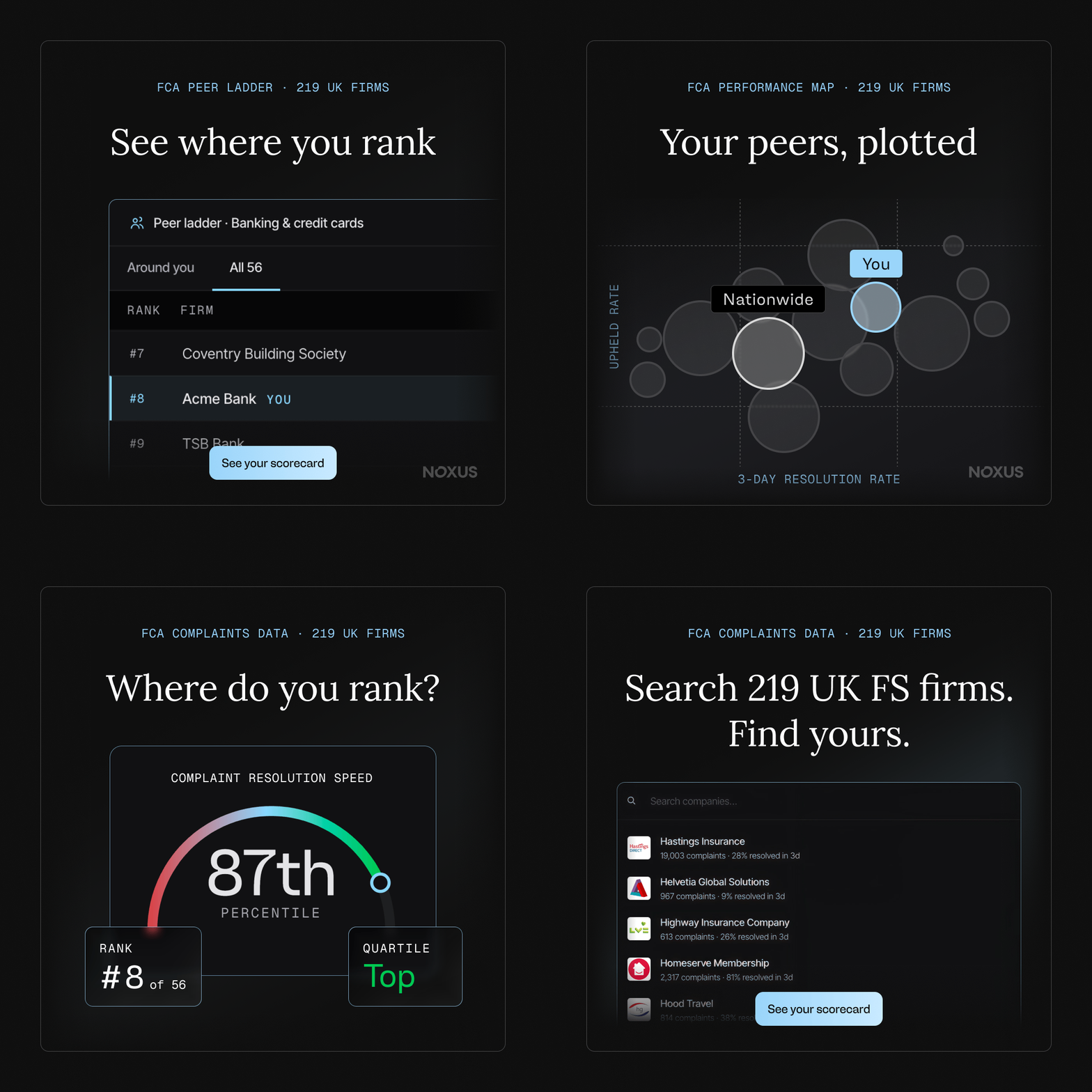
The FCA data was public the whole time. Most startups and scale-ups are sitting next to a dataset like it—and the tools to turn it into something in a unit-economics-friendly way now exist. (Thanks Claude.)